







Metric
Imperial
The Science of Sunsets
Work in progress (this article is not finished yet)
I. The Solar System
In the centre of the solar system, a yellow dwarf star, dwarfs every other object it surrounds. Its name is relative to other stars, but here on Earth, the sun is the source of life. The sun is the most important energy source for our little blue ball.
The energy created through nuclear fusion inside the sun's core is transmitted to Earth in the form of electromagnetic waves. These waves travel at a speed of nearly 300 000 000 m/s towards the Earth, which orbits at nearly 150 000 000 km around the sun. The distance between our planet and the sun is sufficiently large, such that we can assume light rays are parallel when hitting the Earth.
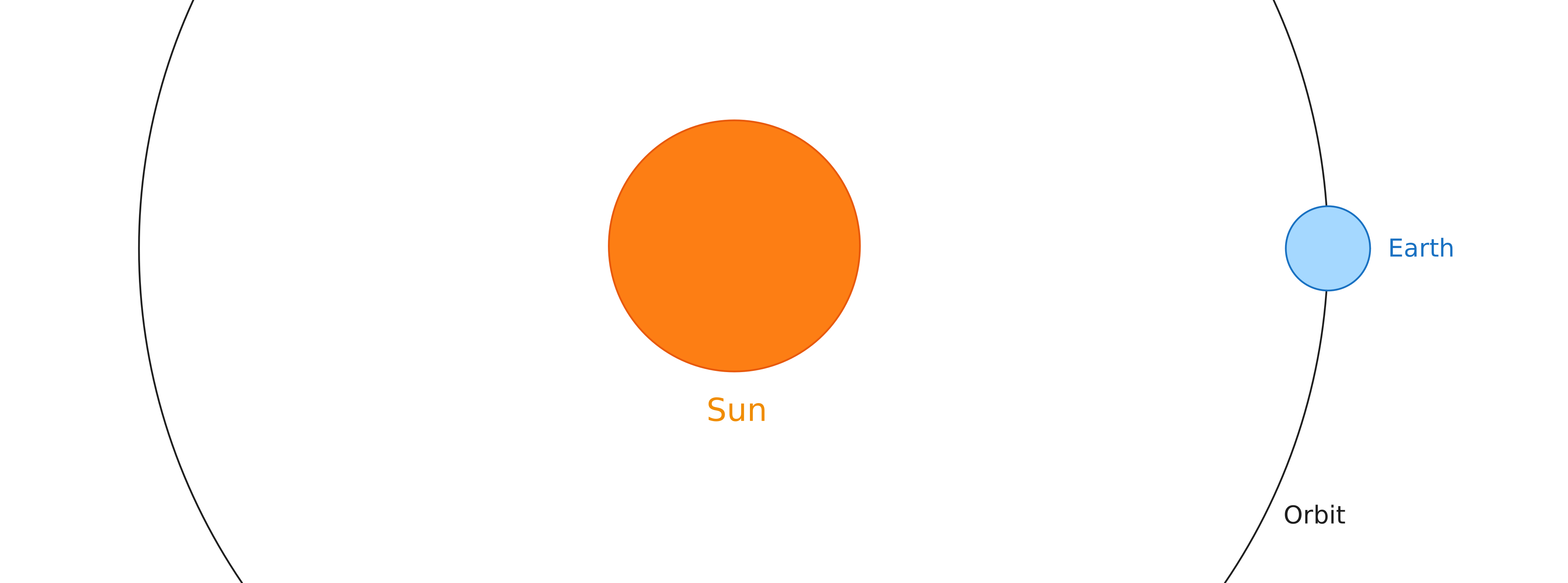
[Figure 1] The sun and the Earth (not to scale)
Earth's orbit is nearly circular, such that the total amount of energy received by the sun is almost constant year-round. That said, the rotation of the Earth and tilt in combination with Earth's rotation around the sun are causes for an unequal distribution of solar light, and thus energy.
These inequalities in sunlight distribution are the root cause of climate diversity on Earth, but in this article, we will focus on how sunlight interacts with the atmosphere and its connection to sunrises and sunsets.
Earth's Rotation
Besides orbiting around the sun, the Earth also spins around its axis. It is important to know that the axis of the Earth is not perpendicular to the ecliptic, or the orbital plane around the sun. This plane contains both the sun and earth at any point during the year.
The line perpendicular to the ecliptic of the Earth (vertical dashed line in fig.2) can be described as the line through the centre of the Earth, which is always perpendicular to incoming sunlight. If Earth's axis were lined up with this line, there would be no seasons and no variety in the time of sunrise and sunset during the year.
The angle between the axis of Earth and the line perpendicular to the ecliptic is currently . This angle is often called the axial tilt or obliquity, and it is different for every planet. For Earth, the axial tilt is constantly changing. It oscillates between about 22° and 24°, with a period of approximately 41 000 years.
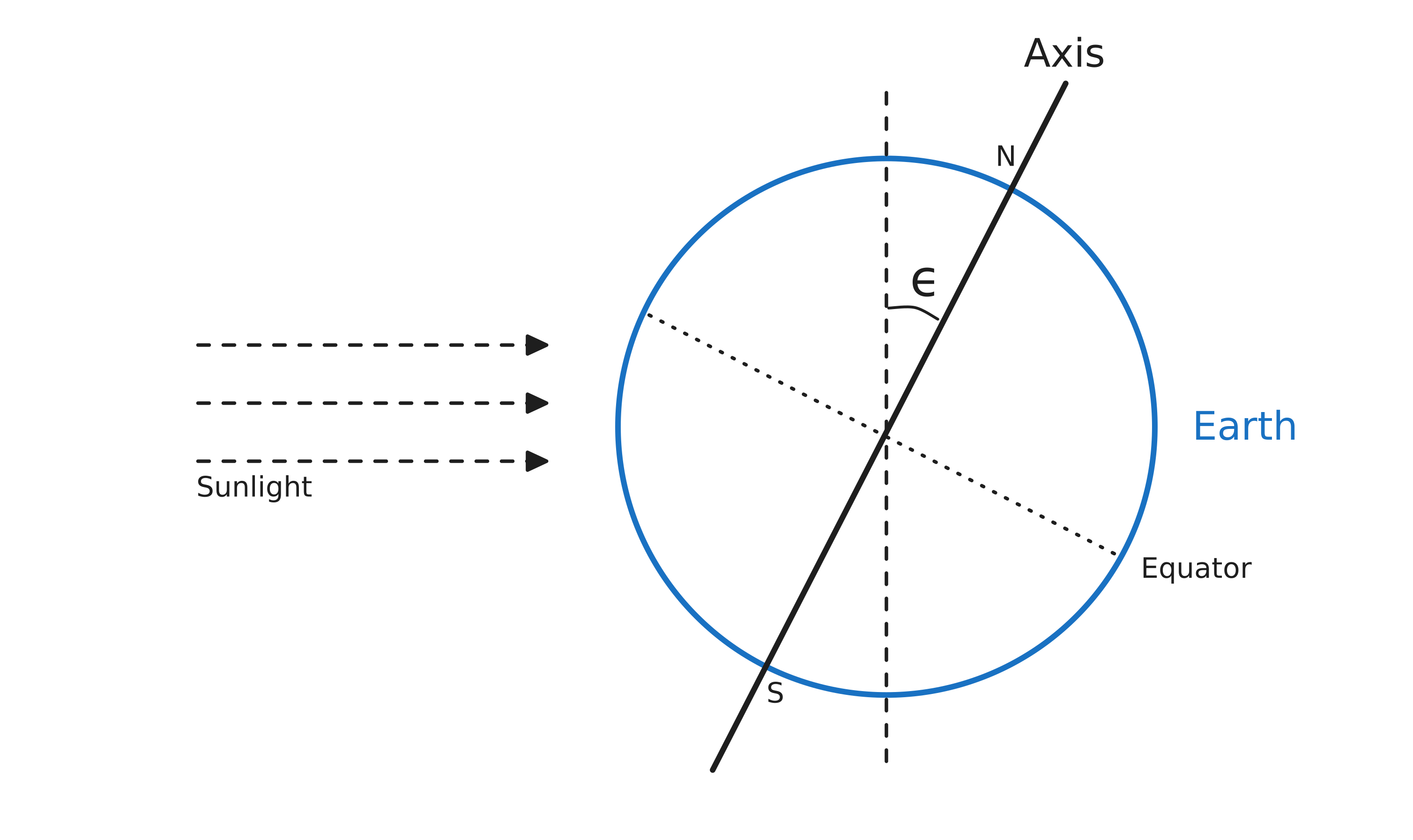
[Figure 2] The Earth's axis and obliquity
Day and Night
As seen from overhead the North Pole, the Earth spins in a counterclockwise direction. Stated otherwise, this means that the Earth spins from west to east. This means that we are constantly moving eastwards with a velocity between 0 km/hat the Poles and roughly 16 700 km/h at the Equator.
This rotation leads to what we on Earth experience as a sunrise or sunset. The rotation leads to sun seemingly moving. This apparent movement is mainly due to the rotation of the Earth. This observation leads us to the important concepts of sunrise and sunset.
Sunrise, Sunset
[Concept 1]
Sunrise is observed as the apearance of the sun above the Earth's horizon, due to the rotation of Earth. Oppositely, the sunset is the dissapearance of the sun behind the horizon of the Earth.
The apparent movement of the sun from below to above the horizon is caused by the rotation of the Earth. Point P on the equator “moves to the east” (Fig. 3), it moves into the region where the sunlight hits the surface of Earth, resulting in a sunrise.
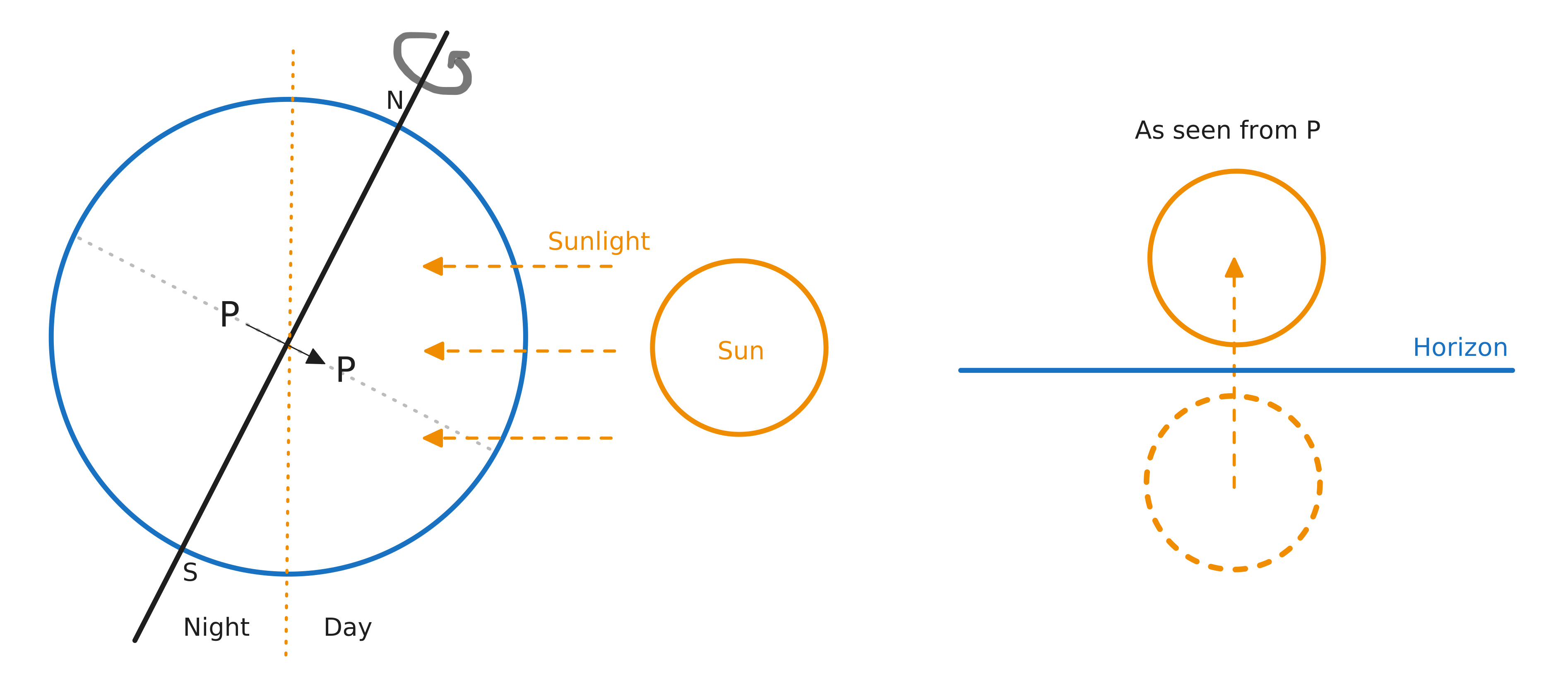
[Figure 3] The concept of a sunrise for a point P on the equator (during an equinox)
Earth's rotation intuitively
[Example 1]
It may be helpful to compare the Earth's rotation and sunrises/sunsets with a ball that is floating in a pool. One half of the ball is under water (night), the other ball is above the water level (day). If you imagine spinning the ball from left to right, and keep looking at a single point, you will see that this points goes under (sunset) and comes back up (sunrise). At sunset the last light hits the point from the left (west), this can be seen as the sun setting in the west.
Due to the west-east rotation, the sun rises and sets first in the east. Only during the September and March equinoxes, the sun rises straight in the east and sets exactly in the west. During these equinoxes, the daylight time is exactly 12h everywhere on Earth.
Besides the equinoxes, there are two more significant times of year: the solstices. The June solstice (around June 21) is the moment of the year with the longest period of daylight in the Northern Hemisphere, the sun is directly in the zenith for locations on the Tropic of Cancer (23.44°N).
The exact direction of a sunrise or sunset varies throughout the year. Between the March and September equinoxes, the sun rises and sets more in the north, reaching its most northern point during the June solstice. This effect is amplified the closer to the poles you get. Between the September and March Equinoxes, with a maximum during the December solstice, the sun rises and sets more in the south.
Direction of sunrise, sunset
[Example 2]
Just like anywhere on Earth, the sun sets straight west in Melbourne during the March solstice (around March 21). When the year progresses, the sun starts to set more to the north. During the June solstice, the sun sets in the west-northwest at about 300° (with straight west being 270° and north 360°). Then the sun starts setting more to the south again, until during the December solstice, the sun sets in the west-southwest at about 240°.
The Earth completes one spin around its axis in 23h56, this is called a sidereal day. An actual day on Earth takes roughly 24h, because the Earth is also rotating around the sun. During a whole year, the Earth moves in a nearly circular path around the sun, this rotation extends a day by about 4 minutes.
Seasons
Every 365 days and 9 hours, the Earth completes a single orbit around the sun. During one year, a whole season cycle passes. This periodic nature of seasonality is caused by the obliquity of the Earth.
During the June solstice, this unequal distribution of sunlight during the year results in seasons. During June, July and August more energy from the sun reaches the Northern Hemisphere, resulting in generally higher temperatures. The opposite is true for the winter months.
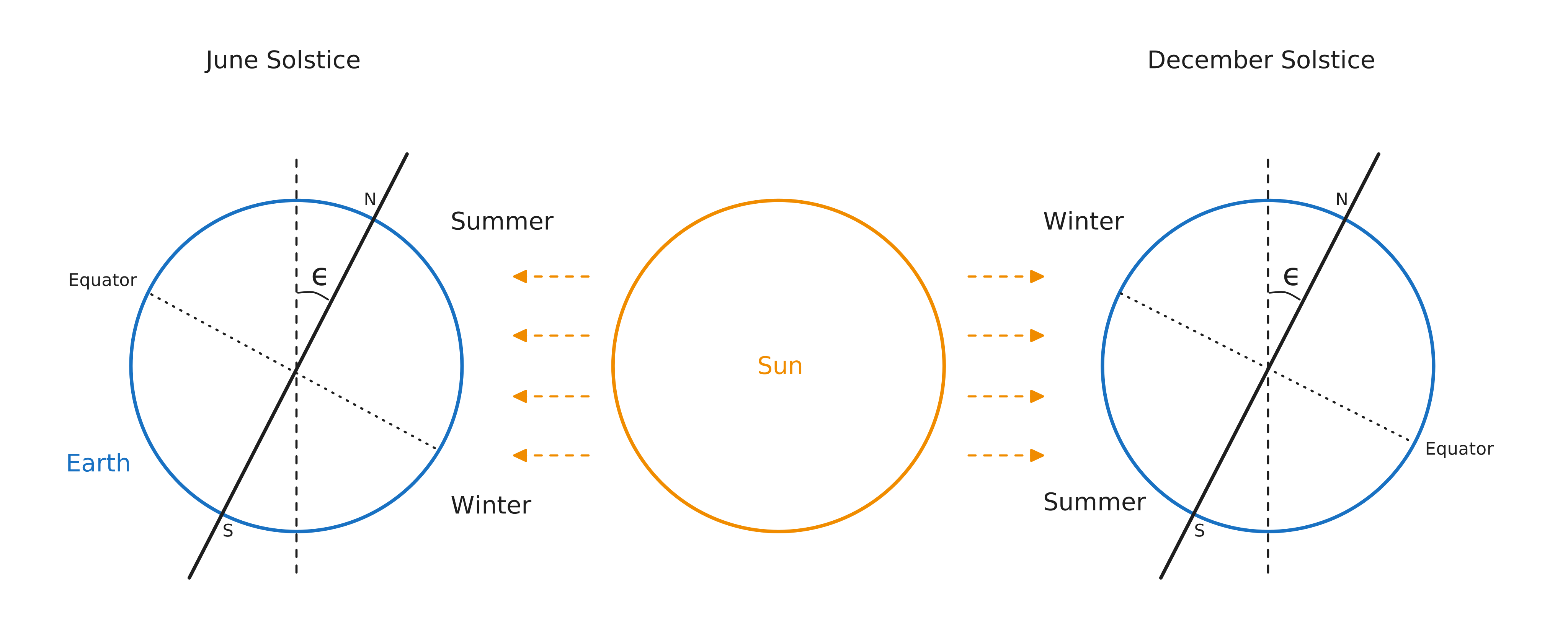
[Figure 4] The Earth rotation around the sun (not to scale)
The Southern Hemisphere experiences its longest day during the December solstice, which is when the Earth is tilted with the Southern Hemisphere towards the sun.
That's why the time of year is one of the most important factors in calculating the time of sunrise and sunset. The obliquity of the Earth results in significant variability of daylight time throughout the year
Earth's rotation around the Sun
[Example 3]
Take the capital of Spain, Madrid. Madrid is located 40° North of the equator. The longest day of the year is reached during the June solstice, around 20-22 June. The sun sets at 21h57. Because Madrid is located north of the Tropic of Cancer, the sun does not hit the zenith, even during the longest day.
From there on, the days get shorter: the sun rises later and sets earlier. This rate of change maximizes around the 21st of September. The shortest day is then reached during the December solstice, the sun sets at 17h20, 4h30 earlier than during the June Solstice.
II. Physics
To be able to understand how and when sunsets are colorful, it is essential to spend a bit of time diving into the physics behind it. In this section, we will take a look at the physics of light: what is light, what is light refraction, absorption and reflection, and how can we think of light when studying sunrises and sunsets?
Light
When Helium inside the Sun fuses to make heavier elements, gigantic amounts of energy get emitted. This energy is emitted as electromagnetic waves. As the name suggests, these waves are built up of electric and magnetic fields. The electromagnetic waves from the sun radiate outwards at the light speed. A tiny fraction of these waves hit the Earth, which we perceive as light among other things.
Electromagnetic Waves
Electromagnetic waves are a type of transverse wave, meaning that their movement is perpendicular to the electric and magnetic fields that make up the wave. These waves move both in time and space, in a sinusoidal manner. The electric field is in phase with the magnetic fields, their frequencies are identical. In the sections that follow, a magnetic wave will always be portrayed as a single wave, without making the distinction between the electric and magnetic fields.
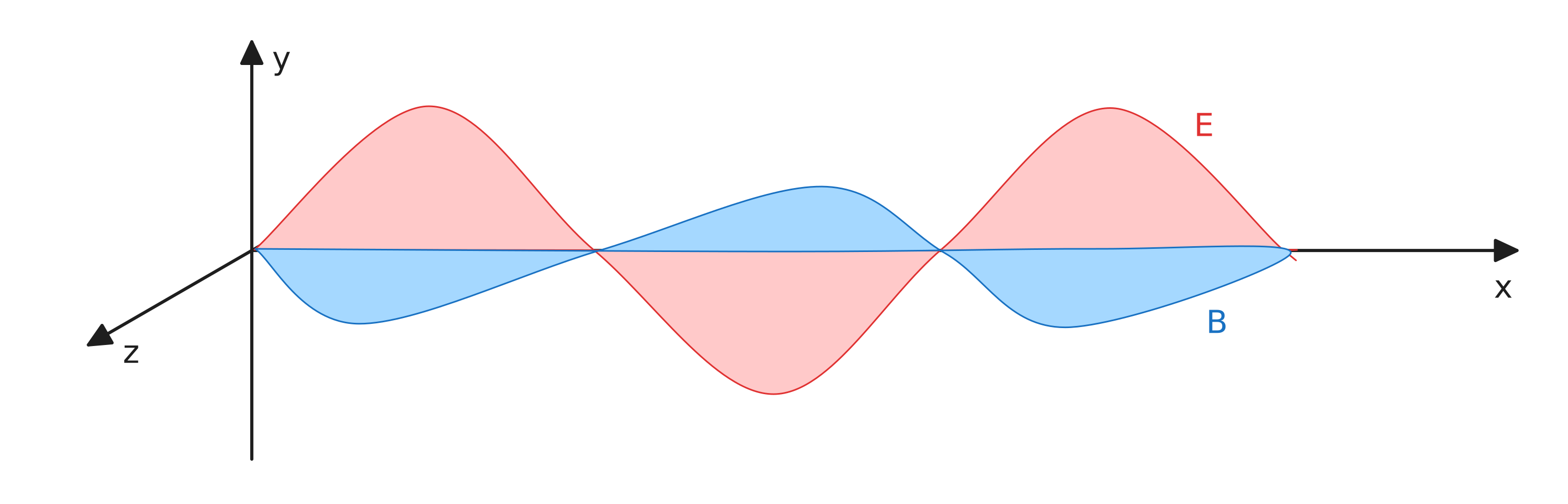
[Figure 5] Electromagnetic wave moving on the x-axis, built up of an electric field (E) on the y-axis, and magnetic field (B) on the z-axis.
The most important property of an electromagnetic wave is its frequency . There is a large variety of frequencies, this is called the electromagnetic spectrum, we will touch upon this in more detail later.
Wave frequency
[Concept 2]
The frequency (f) of an electromagnetic wave expresses the number of oscillations of said wave in one second. It is the inverse of the period (T), which is the time one oscillation takes.
Another important property of a wave is its wavelength , the distance between two wave maxima (or minima). For electromagnetic waves in vaccuum, the wavelength is only dependent on the frequency of the wave. The formula below can be rearanged such that the wavelength (in vaccuum) with the speed of light. Waves with a higher frequency will have a smaller wavelength, the opposite is also true.
Phase velocity
[Formula 1]
: wavelength
: frequency
The linear velocity of a wave, denoted by the letter v.
Later we'll see that the phase velocity of an electromagnetic wave depends on the medium it traves through. Unlike in vaccuum, the phase velocity won't be equal to the light speed in other media. This disparity will lead to refraction of light, which is the basis for colors at sunset.
One last attribute of an electromagnetic wave is its energy. It is directly proportional to its frequency. The higher the frequency, the higher the energy of the wave. This relation is given by (a variation of) Planck's Law.
Planck's law
[Formula 2]
: energy of an electromagnetic wave
: Planck's constant
: frequency
The Electromagnetic Wave Spectrum
As stated before, the main differentiating factor between different electromagnetic waves is frequency. The wavelength is inversely proportional to the frequency in a vacuum. Let's now take a look at the spectrum of different frequencies, starting at the lowest frequencies (largest wavelengths).
Radiowaves have wavelengths of about 1000 m, these waves have the lowest frequency, and thus the lowest energy. Going up in frequency, there are microwaves with a wavelength of about 0.1 mand infrared waves with wavelengths around 10 μm. None of these waves are visible to the human eye.
Then we arrive at the visible light. In the context of sunrises and sunsets, these are by far the most important frequencies of the electromagnetic wave spectrum. The most important thing here is that the color of the light depends on the wavelength/frequency.
Red light has the lowest frequency and lowest energy, with a wavelength of about 0.75 μm. When the frequency increases, the light gets yellow, green, blue and finally purple. Purple light has the highest energy, with wavelengths of about 0.35 μm. Even this relatively small difference in wavelength and frequency between red and purple light will make a huge difference when speaking about refraction and reflection.
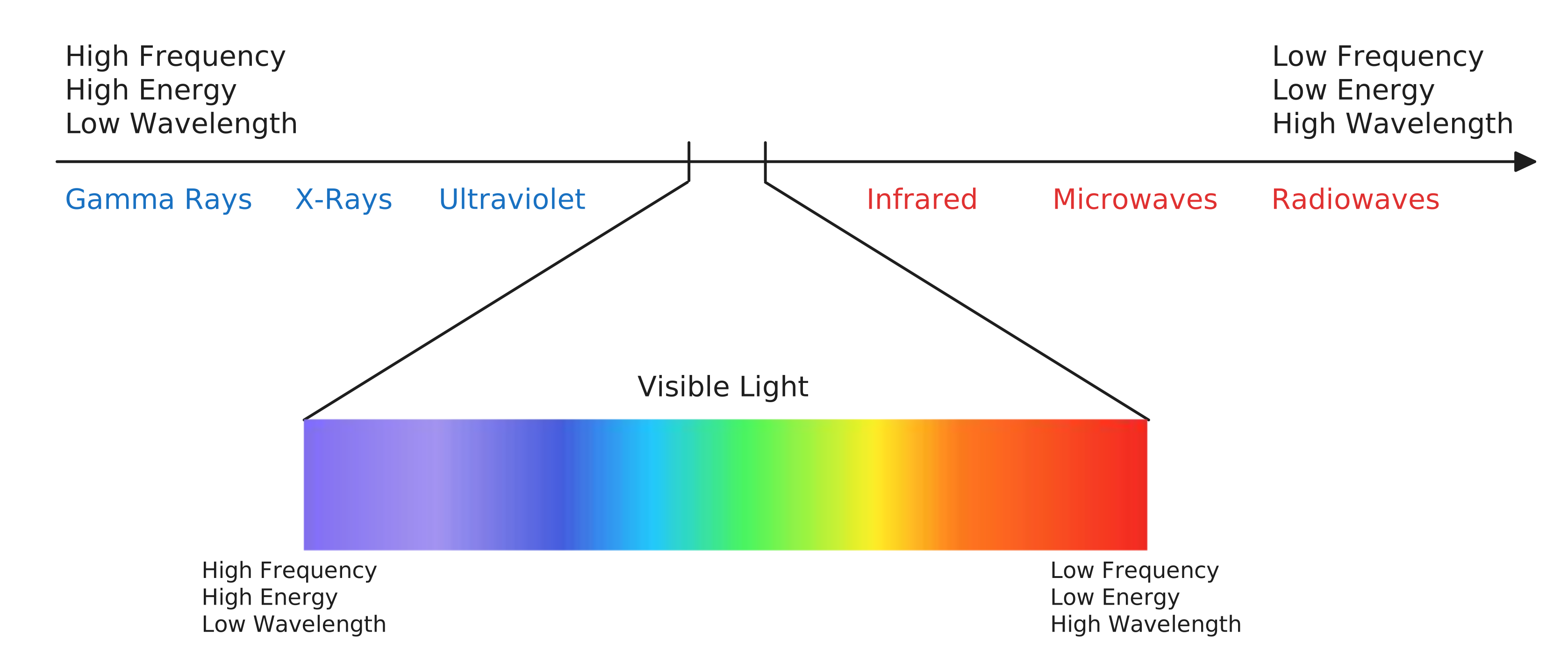
[Figure 6] The electromagnetic wave spectrum
Electromagnetic waves with even higher frequencies than visible light include ultraviolet (UV) waves, X-rays and gamma rays. The last of these have wavelengths as tiny as 1 pm. These waves have a very high frequency, up to 1 YHz (), which means that they oscillate times in one second. Due to this high frequency, they have a lot of energy, and are dangerous to humans.
All of the above waves get emitted by the sun, but only radio waves, a bit of the UV-wave spectrum and visible light get through the atmosphere. The atmosphere acts as a defence against dangerous high-energy waves, like gamma rays and X-rays.
Reflection and Absorption
In this section, three physics concepts will be introduced, namely the reflection, transmittance and absorption of electromagnetic waves. These concepts will be important when looking at how clouds play a big role in the colourfulness of a sunrise or sunset.
Light Rays
Before looking at the concepts of reflection and absorption of electromagnetic waves, we will introduce the concept of a light ray. A light or electromagnetic ray is a line connecting the wavefronts of a wave in a perpendicular manner, pointing in the direction of energy movement.
Light Ray
[Concept 3]
A light ray or electromagnetic ray is a line connecting the wavefronts of a wave in a perpendicular manner, pointing in the direction of energy flow.
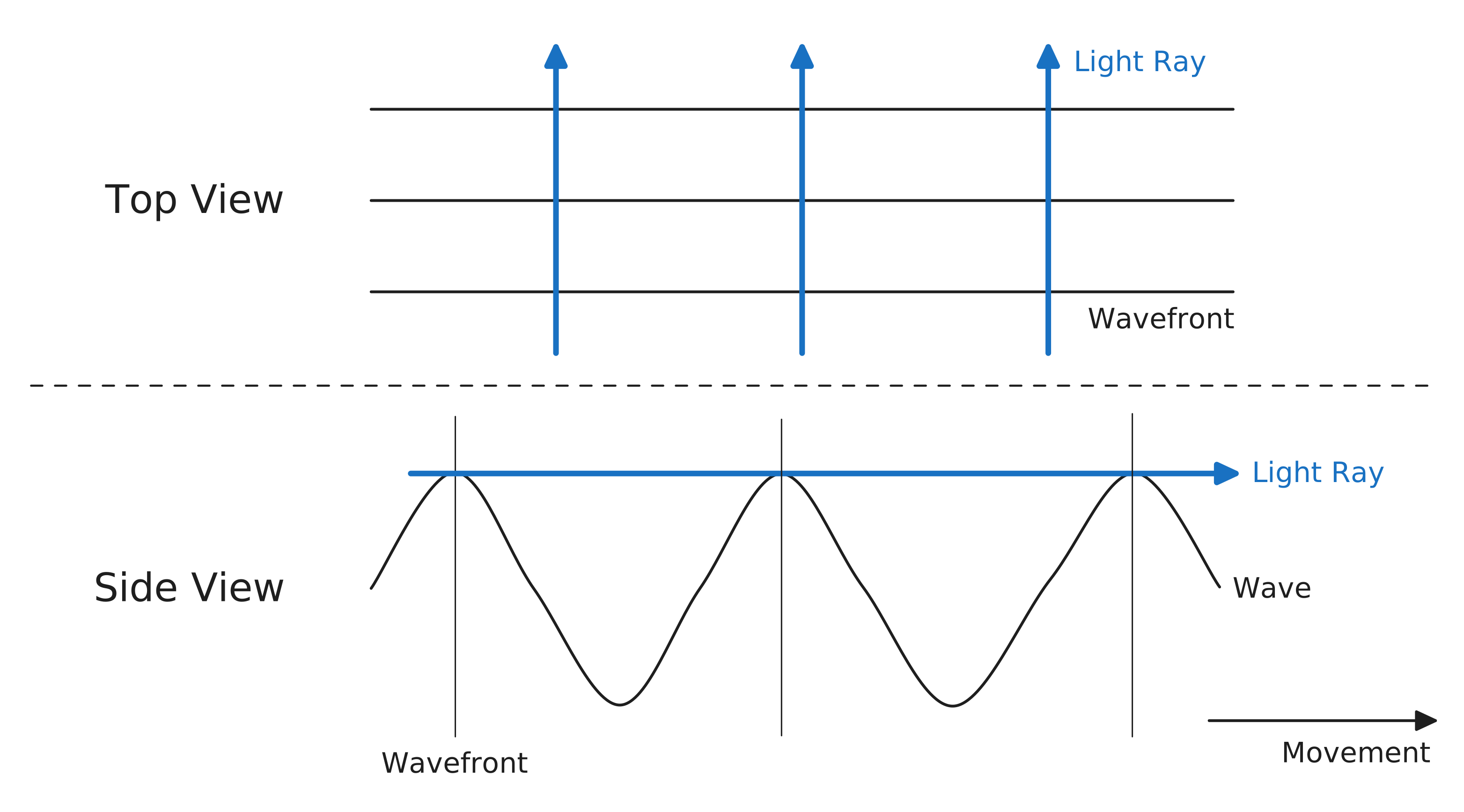
[Figure 7] A light ray of an electromagnetic wave, top view and side view
In our use cases, the direction of energy movement is the same as the movement of the wave itself so you can think of light rays pointing in the wave movement direction. The line can be curved or straight, in what follows only straight light rays will be considered. Light rays originating from the sun can also be considered straight, due to the large distance between the Earth and sun.
It will be easier to understand the concepts of reflection, absorption and refraction when working with light rays instead of the electromagnetic waves themselves. It is important to keep in mind, that we are still talking about waves, but with a different level of abstraction on top of it.
Media
When electromagnetic waves go into a different medium, three things can happen. The waves can be reflected, let through (transmitted) or absorbed. First, we will elaborate on what a medium actually is. A medium can be defined as a substance that moves energy, in this case in the form of electromagnetic waves, from one place to another.
Medium
[Concept 4]
A medium is a substance (gas, liquid or solid) that transfers energy between other substances or from one place to another.
The most important media in the context of sunrises and sunsets are the Earth's atmosphere and clouds. Both of these things do not have a harsh boundary, but we can decently approximate them as such. That's why we will be mainly looking at reflection, transmittance, absorption, and later on refraction in terms of harsh boundaries.
When reading the following sections on reflection, absorption and transmittance, it may be intuitive to think of a medium as a solid material, for example, a sheet of paper, a glass pane or a mirror. The properties of the material will influence the amount of reflection, absorption and transmittance.
Reflection
When a light ray hits a boundary between two media, it can be reflected. Not every object has the same reflectivity, but almost all media have at least some reflective properties. Only objects which we perceive as black reflect very little light.
Besides the amount of reflection, which is dependent on the material, the way light reflects off of a medium boundary is also important. When an incoming light ray (incident ray) hits this boundary, there is a certain angle between the ray and the normal of the boundary. This angle is called the incident angle. When light gets reflected, the resulting ray is called the reflected ray, with a certain reflected angle between the normal and the ray.
Law of reflection
[Formula 3]
: incident angle
: reflected angle
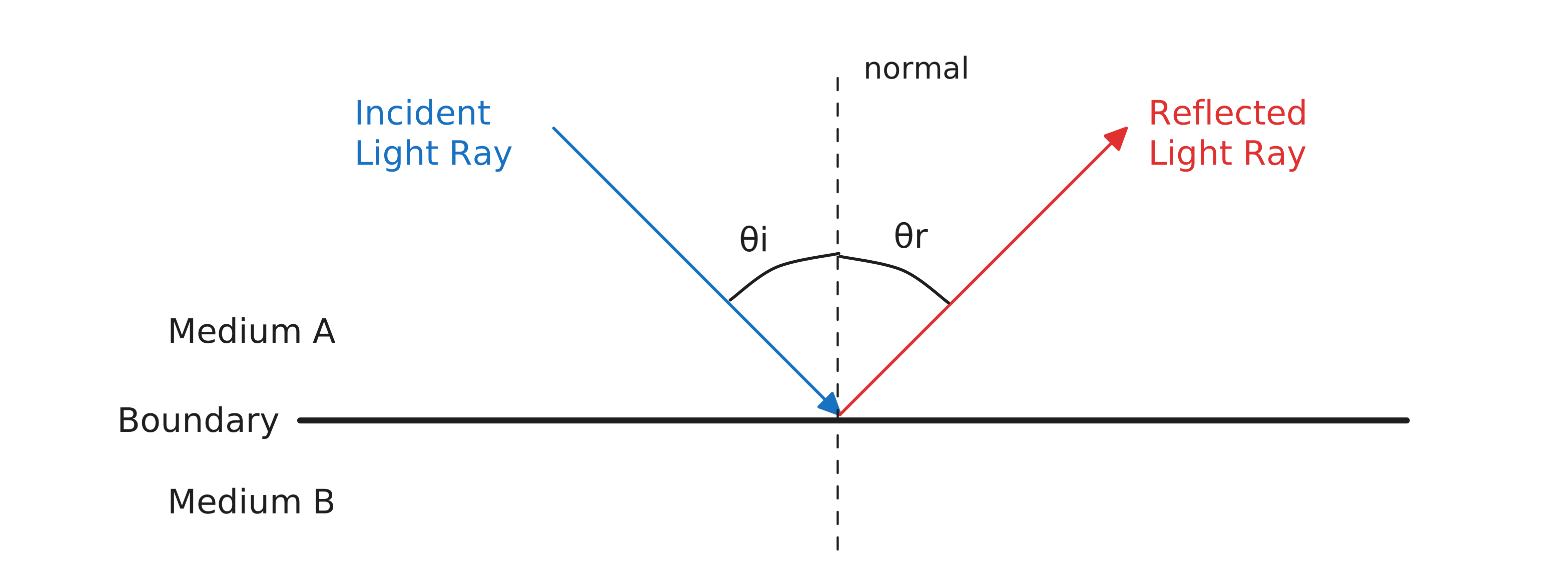
[Figure 8] Law of reflection visually
The law of reflection states that the angle of the incoming (incident) light ray equals the angle of the reflected light ray. This simple law is actually very powerful, especially when talking about clouds reflecting sunlight in our case.
The law of reflection using a mirror
[Example 4]
A mirror is a very reflective material. Most of the light rays which reach the boundary between the air and the mirror will get reflected. It is a perfect way to illustrate the law of reflection. Imagine yourself standing directly in front of a mirror. In this case, the incident and reflected angles are both 90°.
When moving to the right (but keeping focus on the same part of the mirror), the incident angle gets smaller, resulting in a smaller reflected angle. After a while, you won't see yourself anymore in that part of the mirror, but you will see what's left of you.
Absorption and Transmittance
Some substances have transparent properties. This is the case for glass and water for example, but importantly also for the mix of gasses in the atmosphere. Depending on the exact properties of the substance, some of the electromagnetic rays will be reflected, another portion will be absorbed, and the remaining light rays will be let through or transmitted.
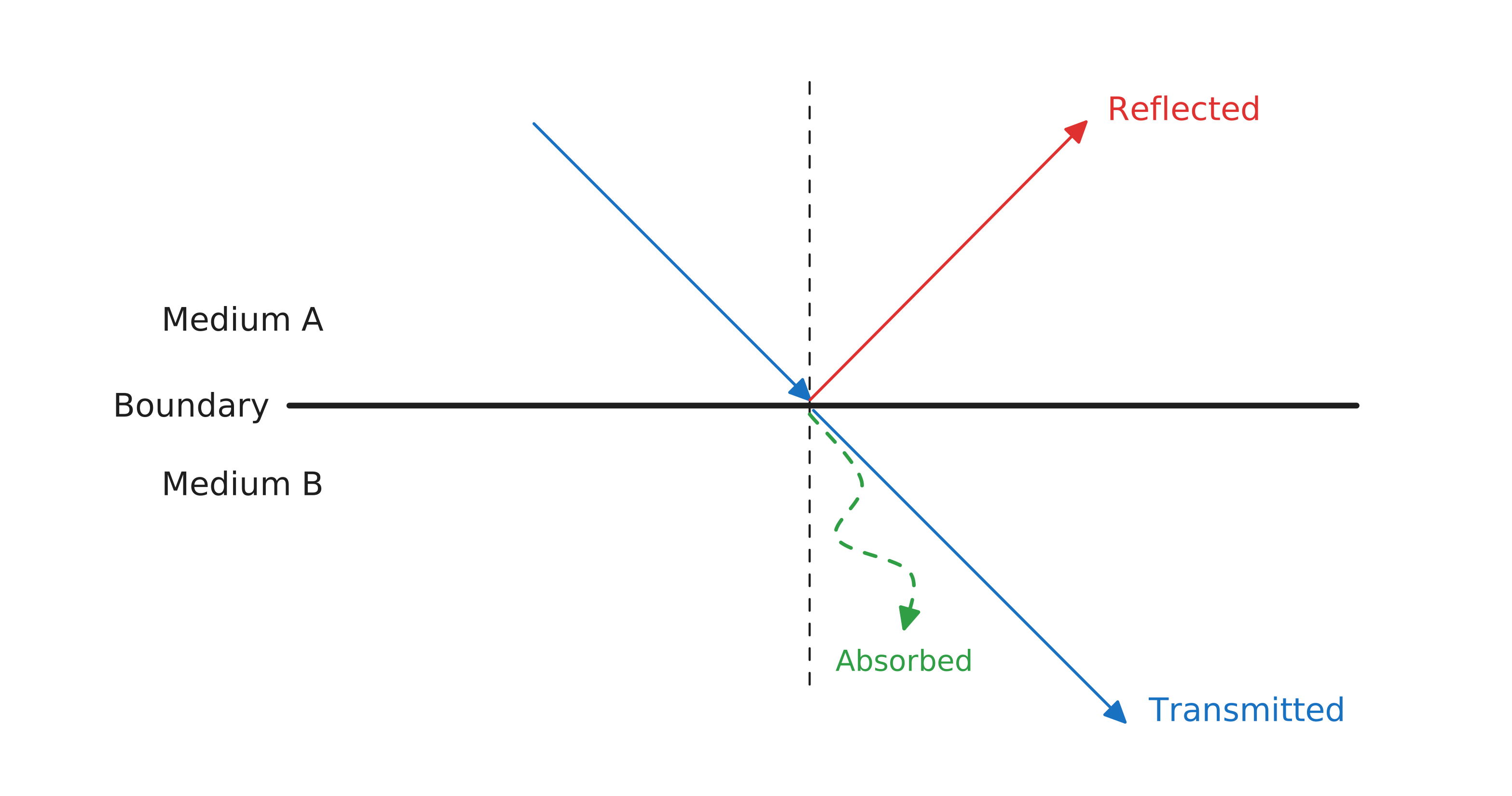
[Figure 9] Reflection, absorption and transmittance at a medium boundary
The transmitted light may not continue in a straight line. When the densities of the different mediums are not equal, the light rays will get refracted at the boundary. More on that in the section about refraction.
Absorption is the process of turning the energy of an electromagnetic wave into heat inside a medium. Some substances only absorb some wavelengths. For example, glass absorbs ultraviolet light, but transmits visible light. If some wavelengths of the visible light spectrum get absorbed, only a part of the color spectrum is reflected. Think about a tree with green leaves, the leave absorbs the red and blue wavelengths, resulting in mainly green light being reflected.
Refraction and Scattering
When a light ray enters from one medium into another with a different refractive index, it gets refracted. Before looking at how the angle of the light ray changes, we will first define the concept of refractive index. The refractive index is defined as the light speed over the phase velocity of electromagnetic waves in a medium.
Refractive index
[Formula 4]
: refractive index of a medium
: light speed
: phase velocity of light in a medium
The refractive index of a substance or medium.
As stated in the previous section on light, electromagnetic waves have a variety of frequencies, but in vacuum , so the phase velocity is always equal to the light speed, and the refractive index is thus .
In all other media, the phase velocity will be smaller than the light speed. Resulting in a refractive index . With that in mind, we can introduce Snell's law, which describes the relation between the angle of the incident and refracted rays in function of the refractive indices of the two media.
Snell's law
[Formula 5]
: refractive index of medium i
: incident angle
: refracted angle
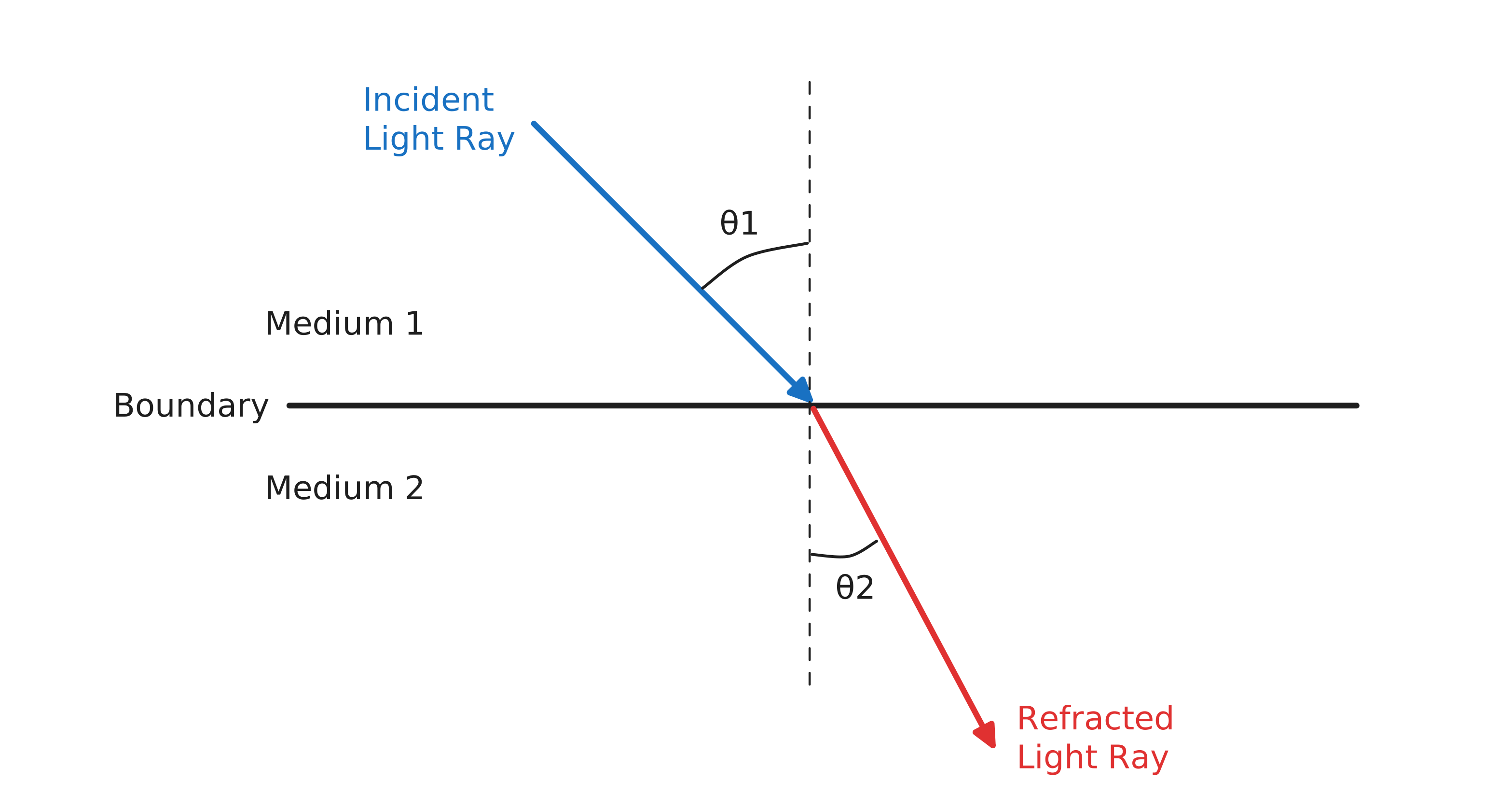
[Figure 10] Illustration of Snell's law, with n2 > n1
So when a light ray moves from a medium with a low refractive index to a medium with a higher refractive index, it gets refracted towards the normal. This is the case when sunlight enters the atmosphere. The atmosphere has a higher refractive index than vacuum, so it gets refracted.
Dispersion
In most materials, notably in water and glass, electromagnetic waves with higher frequencies have a higher refractive index. This brings us to the concept of dispersion. When white light gets refracted, it can be split into the different colors it is built up of. The light with the lowest frequencies (red light) has the lowest refractive index, while the higher frequencies (blue) have a higher refractive index. The colors get separated or dispersed.
Rainbows: reflection, refraction and dispersion in action
[Example 5]
When the white light of the sun hits a raindrop, the light gets refracted and dispersed into the different frequencies of light. Because the refractive index of water is higher than that of air, the light gets refracted towards the normal. Inside the droplet, most of the light is reflected, and when going out of the droplet, it gets refracted again. The dispersed colors will reach your eye, resulting in us seeing a rainbow.
Of course, in reality, there are many of these droplets, and not all drops are the same size and shape, which can result in colors mixing and the rainbow becoming less vibrant or less distinguishable. Because the light gets reflected inside the raindrop, you should always look for a rainbow in the opposite direction of where the sun is.
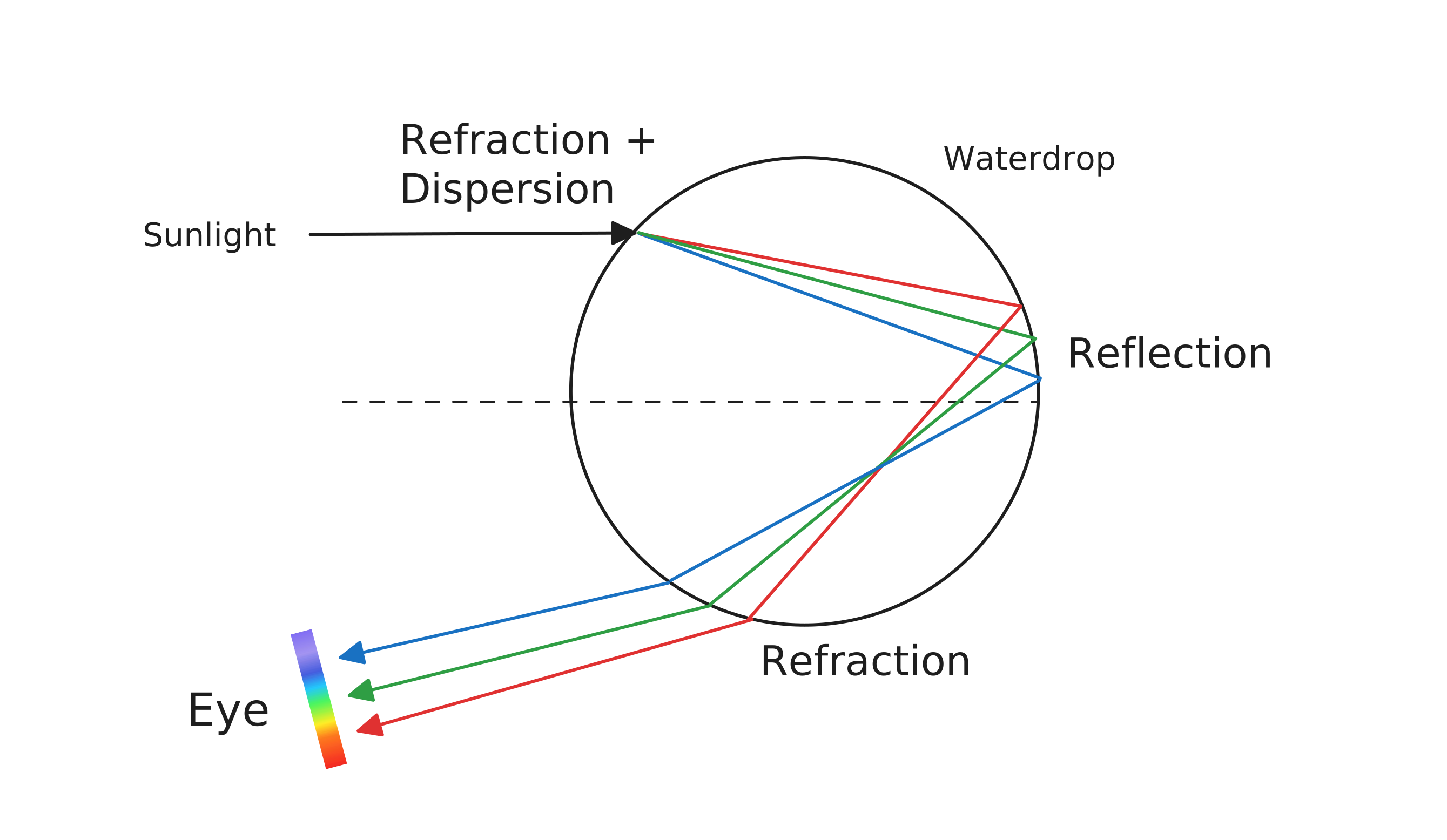
[Figure 11] An idealized figure of the reflection, dispersion and refraction inside a rain droplet
Light Scattering
The scattering of electromagnetic waves or light rays is a quite complex physical concept. We won't dive into too much details of the actual process, but take a look at the consequences of light scattering. When light rays are moving through a medium other than vacuum, not all rays continue in a straight line due to interaction with particles in the medium.
When light rays get scattered, the direction of the light ray changes in a quite unpredictable way. Not all light frequencies of light get scattered the same amount. Higher-frequency light gets reflected more than lower frequencies.
This insight makes it possible to explain why the sky is blue during the day. Blue light has the highest frequencies of the visible light spectrum. Instead of going straight through, many blue wavelengths get scattered inside the Earth's atmosphere. This scattered blue light makes its way into our eyes, resulting in humans perceiving the sky as being blue.
Applications
In this last section about physics, we will take a look at applications of light refraction, reflection and scattering in the context of sunrises and sunsets. Many of the subjects will be further explained in the chapter on meteorology.
Refraction
As light rays from the sun move towards Earth, they enter the atmosphere of our planet. Since the atmosphere gradually gets more dense, the closer to the surface of Earth, the light gets refracted. Remember that the refractive index in vacuum. The refractive index of air at Earth's surface is slightly above , resulting in refraction, and thus a change in angle of the light rays.
You can think of the atmosphere as layers with increasing density, and increasing refractive index. At each of the boundaries, the light rays get reflected slightly. Since the refractive index gets bigger, the light is refracted towards the normal.
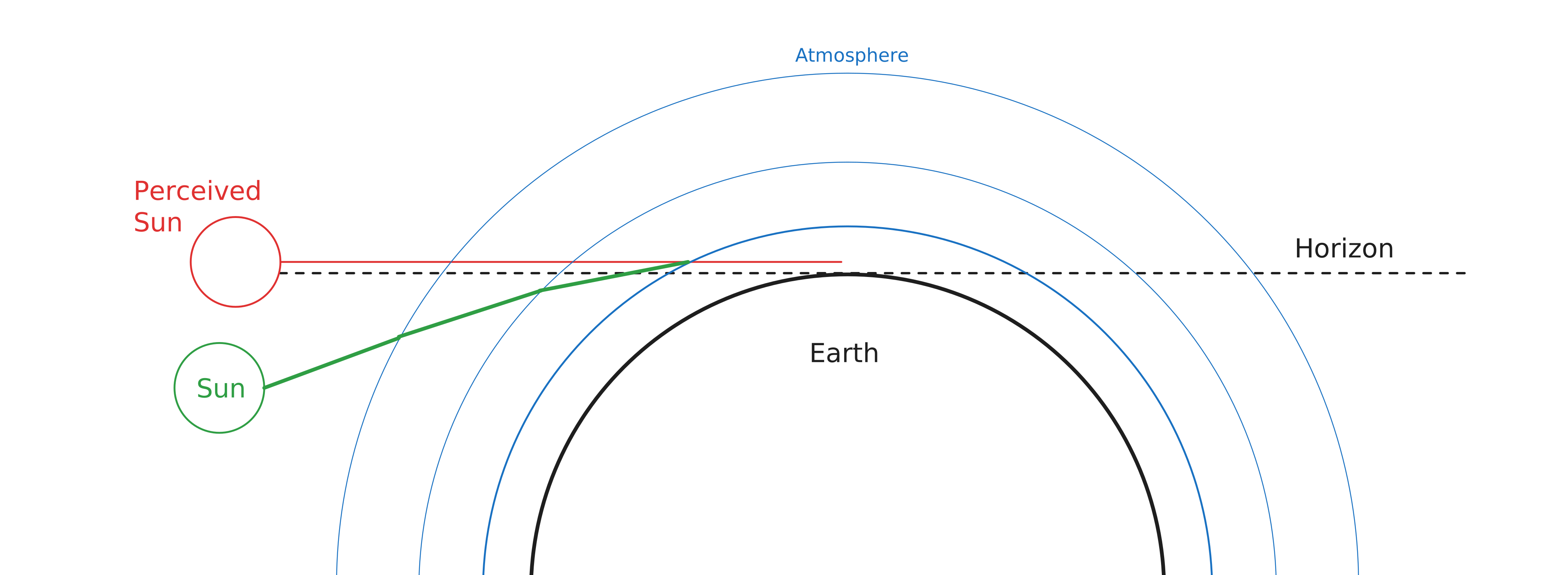
[Figure 12] Perceived position of the sun due to refraction in the Earth's atmosphere (not to scale)
This results in the perception that the sun rises even though it is still under the actual horizon, and the sun setting a couple minutes later than expected. In most sunrise and sunset calculators, this refraction is included in the calculations to display the time of perceived sunrise and sunset.
Scattering
When light passes through the atmosphere, some frequencies are scattered. We already established that this was the cause for the sky being perceived as blue. When the sun sits low on the horizon at sunrise or sunset, the light has to travel a greater distance through the atmosphere, resulting in more blue light being scattered.
The increase in blue light being scattered, results in less blue light making it towards Earth's surface where it can be perceived by us. Since less blue light is getting to our eyes, the light will contain the colors green and red, which makes yellow.
When the sun sits even lower on the horizon, some of the green light can get scattered away too, resulting in the sunrise or sunset being perceived as orange or even red. Since these colors make it through, they can get reflected by clouds, amplifying the spectacle.
Reflection
The reflection of light in the context of sunsets is important for the reflection of said light on clouds. If there are no clouds in the sky, these colors can't really get reflected into our eyes, especially after sunset or before sunrise when sunlight can't directly hit the Earth's surface anymore.
Based on the position, both the horizontal and vertical of the clouds, the direction the light gets reflected can be determined. Clouds are the single most important factor in calculating sunset quality, more on that in the section about meteorology.
Transmittance
If light can't get transmitted at the horizon due to clouds blocking the horizon, less light can reach the Earth's surface and clouds in your area, resulting in a weaker sunset. More on the concept of horizon blocking will be discussed in the section about meteorology, but the transmittance properties of clouds will play a significant role in horizon blocking.
III. Meteorology
This last and most important section will cover all meteorologic aspects of sunsets. Meteorology is the study of the atmosphere and weather. The quality of a sunset depends greatly on the weather, so meteorology is a key part in understanding and forecasting how beautiful a sunrise or sunset will be. This section will introduce a variety of meteorological concepts that influence sunrises and sunsets. In combination with the previous section on physics, we will finally be able to explain which factors really contribute to beautiful sunsets.
The Troposphere
The atmosphere of Earth is built up of several layers. The lowest of these layers is the troposphere, stretching from the Earth's surface to the tropopause at a height of about 12 km. Inside this relatively thin layer of the atmosphere, everything weather-related takes place. From pressure systems to clouds, all meteorologic concepts introduced in this section will be part of the troposphere.
Before taking a look at what processes in the troposphere wil have an impact on sunrises and sunset, let’s take a little deeper look at the Earth’s atmosphere. Our atmosphere functions as a protective shield, protecting us from dangerous ultraviolet radiation from the sun. About 25% of the incoming electromagnetic waves from the sun are reflected away from Earth in the atmosphere due to aerosols and clouds. Another 25% is absorbed by the atmosphere, about 5% is reflected from the Earth’s surface, and the remaining is absorbed by the Earth’s oceans and surface.
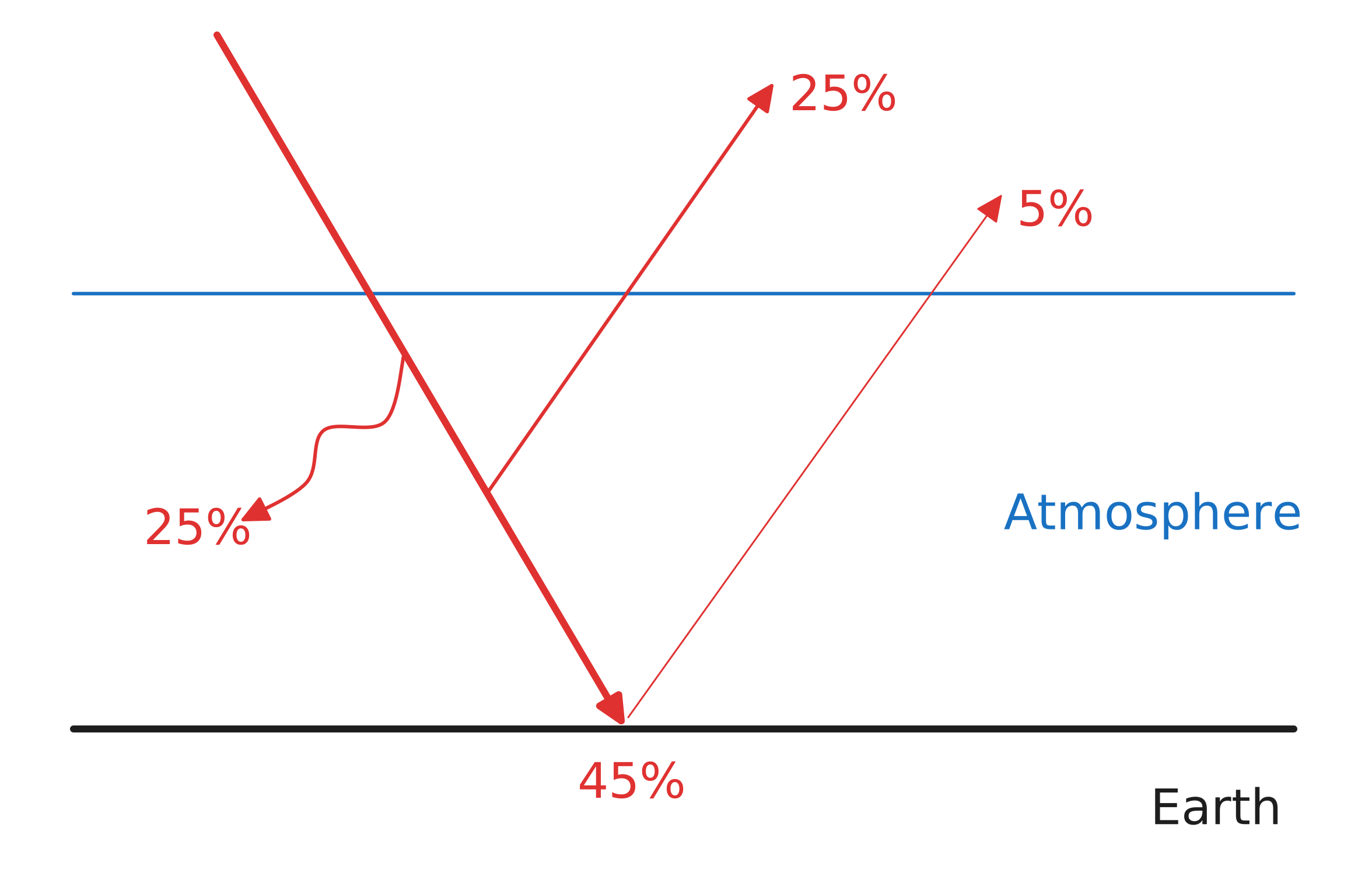
[Figure 13] The balance of incoming electromagnetic waves
© 2026 - Sunsethue (v0.11.0-beta)
-
Made in Europe
