







Quality Interpreting Guide
This guide will explain how to interpret the Sunsethue sunrise and sunset quality metric and other relevant data, so that you can manage your expectations and plan accordingly. We will start with a quick overview of some relevant metrics, whereafter we will explore what makes a great sunrise or sunset and how this is reflected in the Sunsethue quality metric and its categories.
General concepts
Time – the time of a sunrise or sunset is the time when the sun visually appears above or disappears below the horizon.
Quality – the quality metric tries to portray how beautiful a sunrise or sunset will be in a single value between 0 and 100, more info on how to interpret this below.
Cloud cover – the cloud cover metric is a value between 0% and 100% that specifies how many clouds there will be present in the sky during sunrise or sunset.
Direction – the direction of the sunrise or sunset in degrees or as a wind direction. The best colors are often observed in this direction.
Magic hours – the golden hour and blue hour are periods surrounding sunrise and sunset which generally boast good light for photographers (read more)
Quality Distribution
Scores are not evenly spread. Most sunrises and sunsets are in the low range, while high scores are much less common. A score of 50 does not mean that it is an average sunset.
Values and Icons
Quality — Visible as a big number [0-100] accompanied by the categorisation (poor, fair, good, great, excellent).
Clouds — Amount of clouds in the direction of sunrise/sunset [0-100%].
Sun visibility — Shows up when there are little to no clouds at the horizon.
Rarity — Shows that a sunrise or sunset is better than 95% of sunrises and sunsets, meaning such an event does not occur often.
Uncertainty — Indicates an increased level of uncertainty associated with the forecast; it might change or be different than predicted.
More info — Click any sunrise or sunset for a description, examples, rarity information, and other details.
Aspects of a good sunset
The beauty of a sunrise or sunset is of course subjective, nevertheless we will give some aspects and ideas on what makes a good sunrise or sunset. Sunsethue’s quality metric tries to account for these aspects.
Colors – one of the main aspects of a good sunrise or sunset is its colors. Good sunsets are often accompanied by vibrant colors. The vibrantness of the colors during sunset is accounted for by checking if the setting sun can reflect off the clouds (read more).
Duration – the duration of the colors during sunrise or sunset is not always the same, and is influenced by the height of the clouds and potential blocking. The longer the duration of the colors, the higher the sunset quality score.
Expanse – this last aspect relates to how much of the sky is filled with colors during a sunrise or sunset. The greater the expanse of the colors, the higher the sunset quality.
The interpretation is the same for sunrise and sunset. Keep in mind that the forecasts are subject to uncertainty, and thus the predicted sunset quality may not always be fully in line with the conditions of a good sunset as outlined above (read more).
Categories and examples
This last section will go over the five different categories of the sunset quality metric. We will give a quick overview of what sunrises and sunsets you may expect when a sunrise or sunset is forecasted to be within each of these categories, including some example photos.
Poor [0-20]
The worst category is the poor category with sunrises and sunsets between 0 and 20. Poor sunsets do not result in many (if any) colors. Most of the time, a lot of clouds (especially low clouds) are present in the sky which block the light from the rising or setting sun.


Fair [20-40]
The fair category consists of sunrises and sunsets between 20 and 40. These sunsets can occur if there are little to no clouds present in the sky to reflect the sunlight, or if there are clouds present which only temporarily or in small quantities reflect light. These sunrises and sunsets tend to be quite bland, and not that spectacular. But for some, these sunsets may definitely already be worth it.


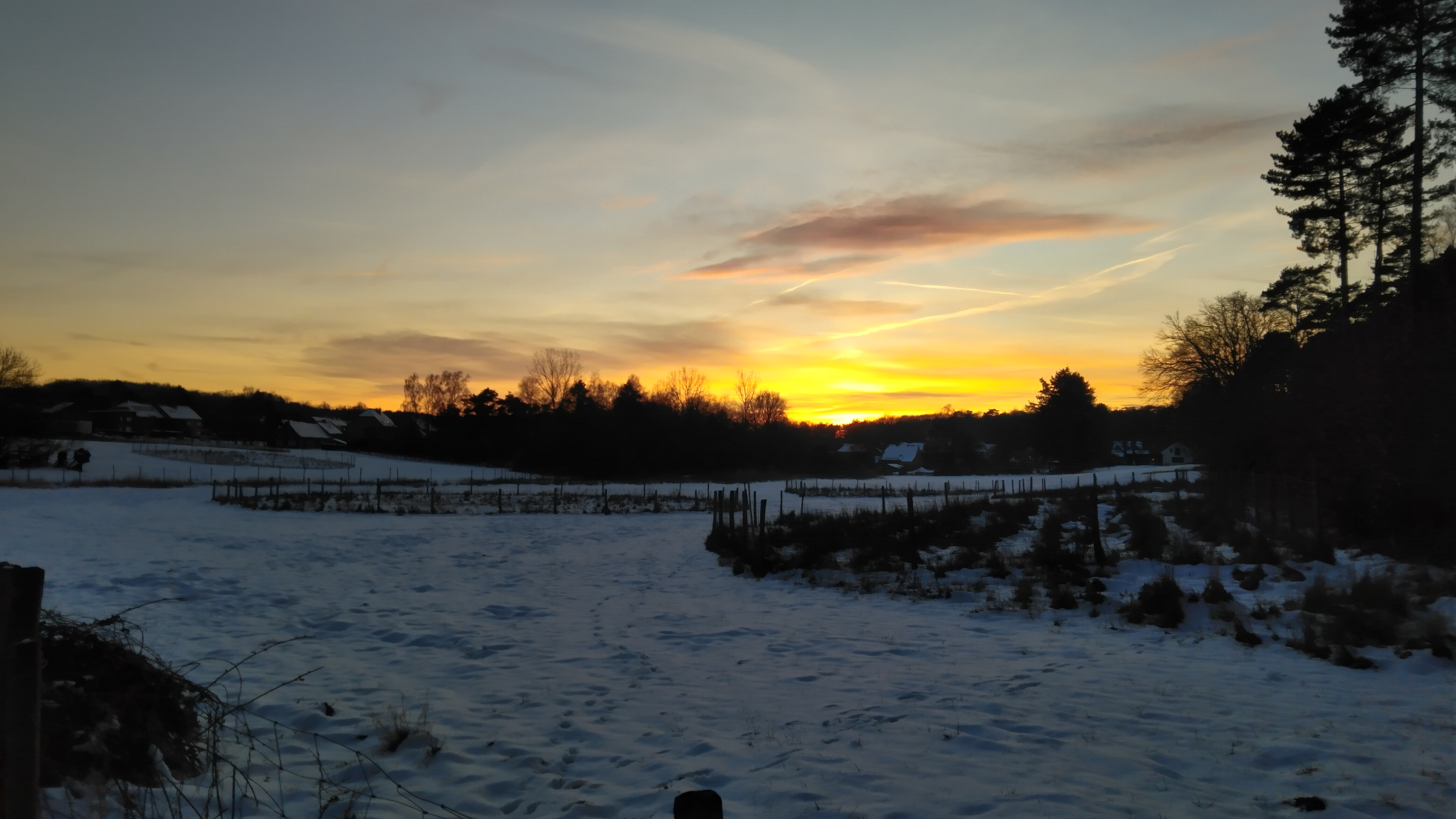
Good [40-60]
From here on out the sunrises and sunsets start to get serious. The good category consists of sunrises and sunsets between 40 and 60. For most of the good sunsets, there are some middle high or high clouds present that reflect sunlight during and right after sunset. The colors last for at least some time, but some factors still limit the expanse and duration of the sunset (eg. not enough clouds, or other clouds that block light).

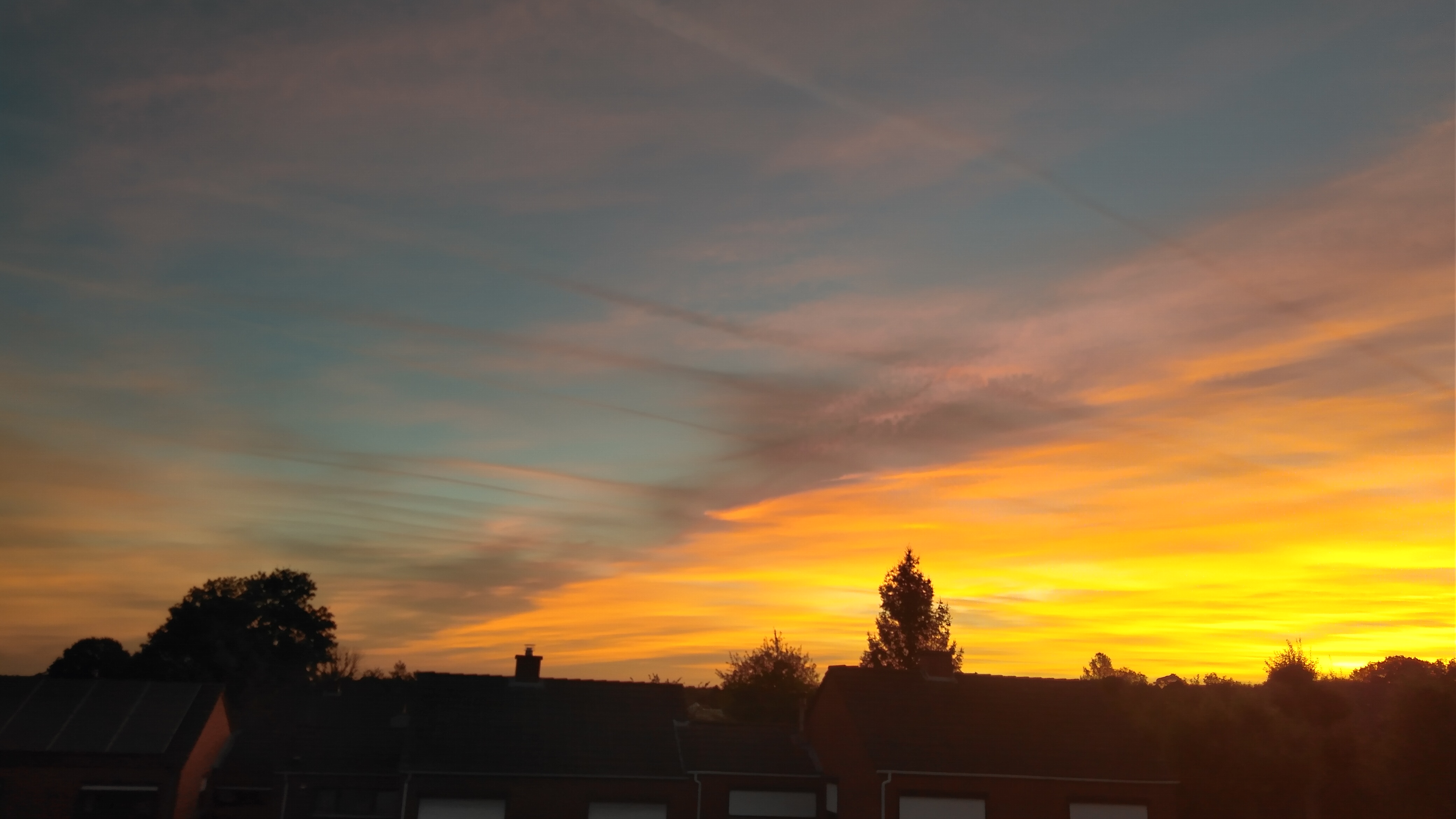
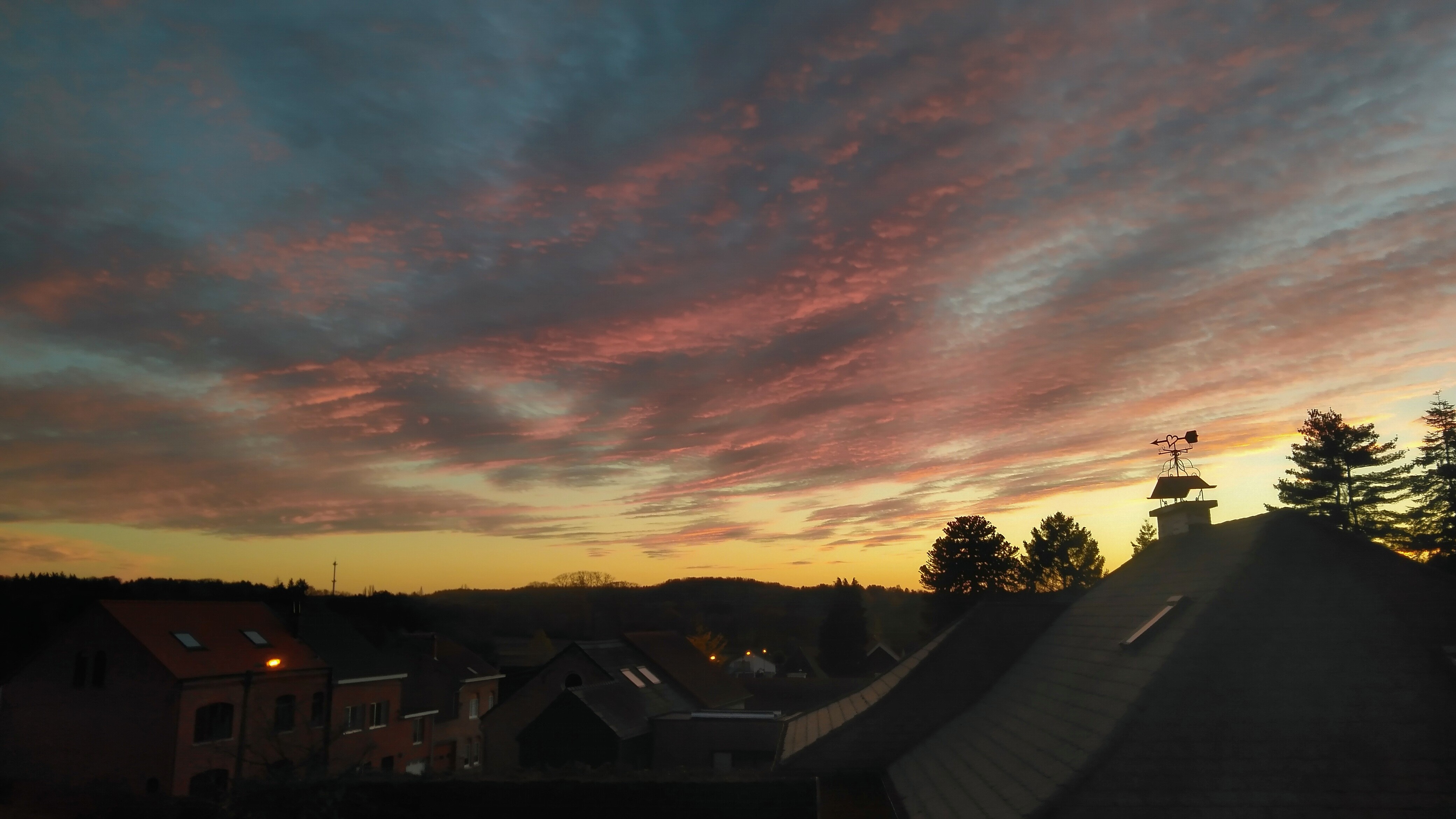
Great-Excellent [60-100]
The last two categories are great and excellent. We will group these categories, because excellent is very uncommon, and essentially just the superlative of a great sunset. Great or excellent sunrises or sunsets occur when there are enough middle and high clouds present which can reflect light at a great expanse, while there are no or very little clouds to block said light. These sunsets can last quite long and go through pretty much all colours, from yellow, over orange and red, to pink.
© 2026 - Sunsethue (v0.11.0-beta)
-
Made in Europe
